

Partition / Taqsim
I cast my nets into the sea I found the waves, some laughing, some weeping The wave asked me: what do you have? I told it: it is the separation from my dearest love.

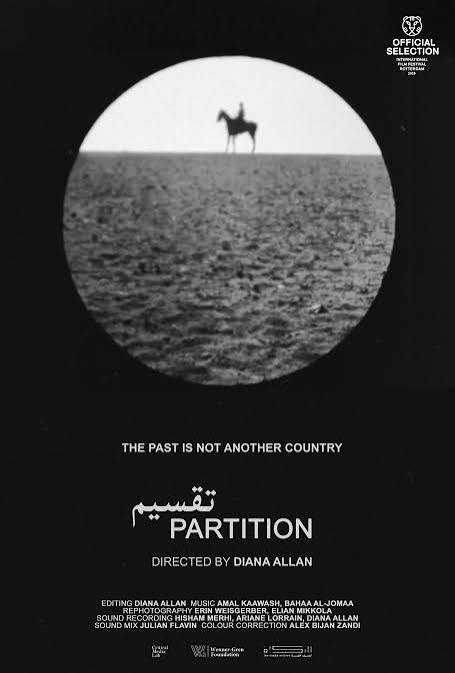
A Palestinian film, about Palestine, called “Partition”…
Before watching it, my mind was already flooding with images — the 1947 UN session that partitioned historic Palestine, and those of the hundreds of thousands of Palestinians making their way from their ancestral home into exile, as a consequence…
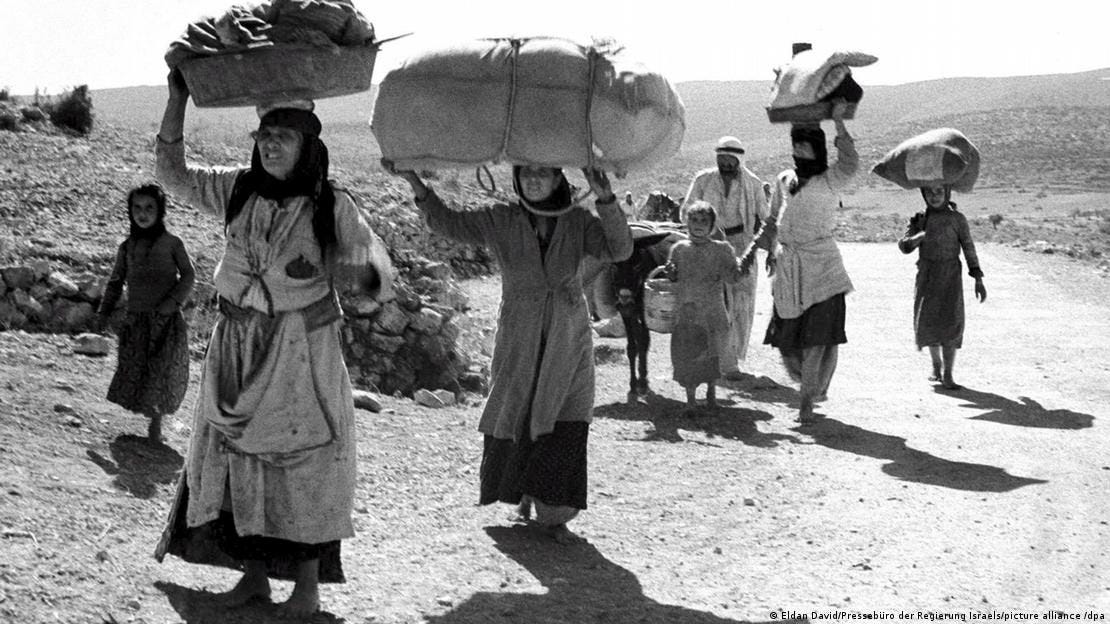
But no. This is a film that is, so to speak, more poetic, more suggestive, less explanatory.
It weaves together — a collage, a superimposition — archival images from Palestine, drawn from British archives, and sound recordings: conversations, street sounds and mosque sounds, recited poems and popular songs. Some of the images date from the early twentieth century, others from the 1940s; the recordings are more recent, made above all, it seems, in refugee camps in Lebanon.
I watched the film as someone who had been given a specific task: to discuss it before an audience (as part of the Ecofalante Festival).
I don’t know what I would have thought about the film had I approached it as a work of art to be savored, enjoyed, felt; I don’t know what I would have said — or whether I would have fallen silent.
I needed to have something to say. And that something needed to be useful…
The first thing the scenes made me think was that for over a hundred years now — well before the Partition — Palestine was full of Palestinians, whom the camera could not help but capture. The myth of a land without a people was only ever a myth.
The film opens with a poem belonging to a category I find myself likening to the Brazilian repente — a style practiced in villages, in colloquial Arabic, very common across the Arab Levant (Palestine, Syria, Lebanon…). This is the zajal, and in this particular poem, an ‘ataba — a lament, a complaint. The poem goes:
I cast my nets into the sea
I found the waves, some laughing, some weeping
The wave asked me: what do you have?I told it: it is the separation from my dearest love.
I recognized the form and the rhymes at once — or rather, more than rhymes. Many were the times, especially as a child, when I watched old and young alike venture into the search for the best words, challenging one another.
Even as I felt that familiarity, I realized how much of the poem’s essence — and of the tradition it belongs to, and of the feeling it evokes — would escape a viewer unfamiliar with Arabic and with the specific context of the Levant.
Without pretending to fill that gap, a task perhaps impossible, I want to open a small window of explanation: in Arabic, “my nets” appears as shibaki, “some weeping” as shi baki, and “what do you have?” as shu baki?. Only the final verse — called the mayjana — escapes with a near-homophone ending.
Beyond the specificity of the ‘ataba, many things would inevitably be lost — by virtue of the film’s structure and form — to anyone unfamiliar with the Palestinian question, with the Lebanese chapter of its history, with the Arabic language and Arab traditions… I had an advantage in appreciating the material.
But there was something that eluded me, and it was connected to the film’s title — Partition in English, Taqsim in Arabic. Before confirming the original title in both languages, I hesitated in Portuguese between partição and partilha. Diving into the meanings of those words (as I have done before, like the plunging jackal I mentioned in another text), I recalled that partilha — despite being so common in Brazilian discourse about Palestine — cannot quite fit, and does an additional injustice to Palestinians, since it implies a fair and equitable distribution.
If we must choose between the two words to describe the division of historic Palestine’s territory, let us stay with partição — partition.
If, however, we wish to speak to the concrete reality of what happened there, we must recognize that the partition was only one step — almost a bureaucratic one — on the road that would lead to the expulsion of Palestinians from their land. “Partition” does not adequately describe the Palestinian drama. On the contrary, it helps to conceal the true intent: ethnic cleansing…
But if the film does not directly address the process or the act of partition, and if neither the images nor the sounds properly refer to that historical moment — why does it carry “partition” as its title?
Unable to enter the minds of the filmmakers and decipher their intentions, and wary that a deeper investigation into those intentions might reveal something more banal than I would wish my imagination to conceive, I decided to undertake a freer exploration: to go wherever the language took me, in its play of meanings — the Arabic language, I mean.
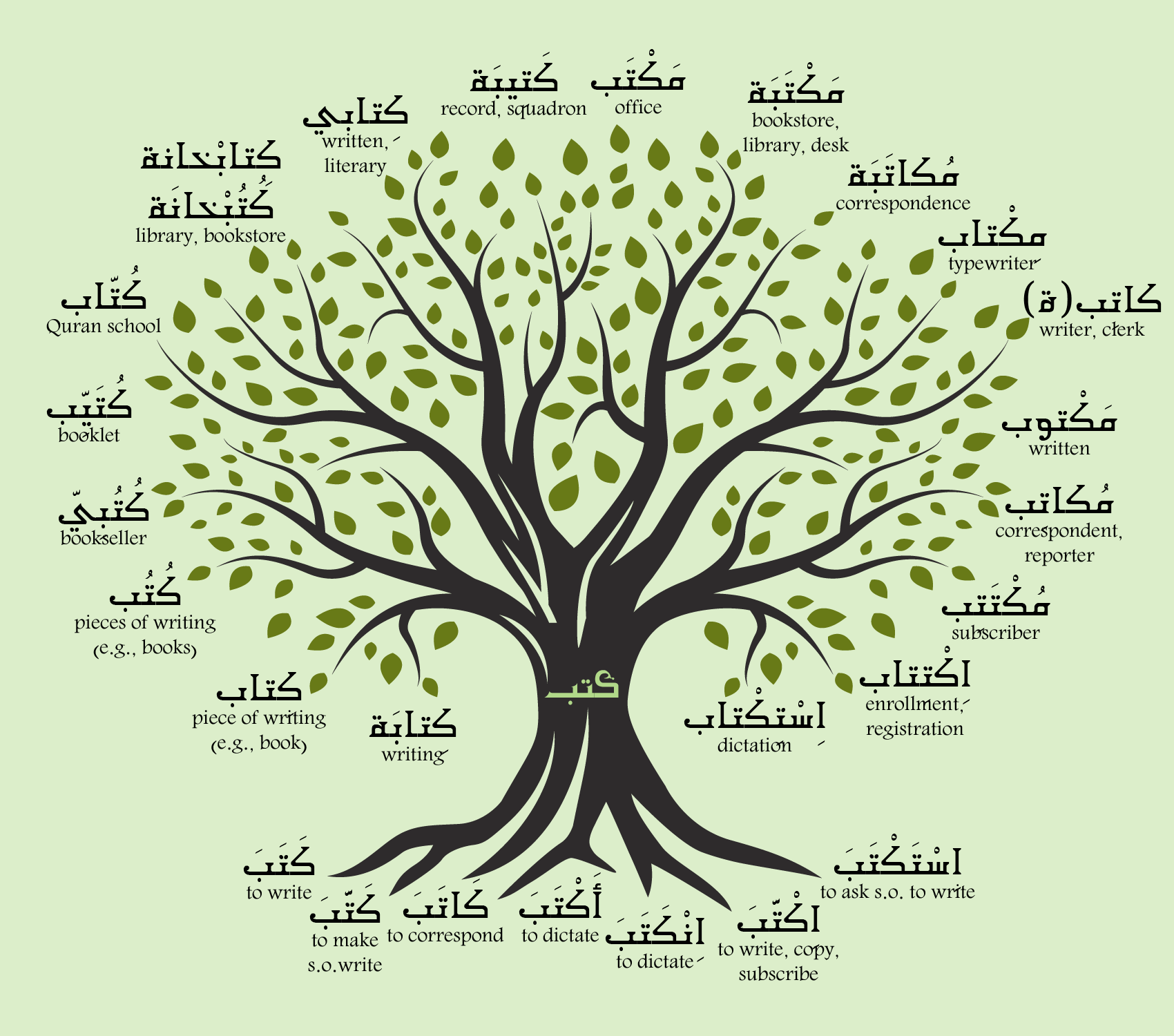
Taqsim does indeed mean partition. Let us recall that in other texts we have already spoken about Arabic — its consonantal nature and the basic structure of words, the triconsonantal roots. The root that gives rise to taqsim is q-s-m, which expresses directly the meaning of the verb: to divide, to partition, to split, to distribute.
From the same root derives the word qisma, which, understandably, means the portion resulting from a division — the share that falls to someone. But from here one can already attempt a somewhat higher flight and draw a connection to the Palestinian Question: the portion that belongs to someone, qisma, carries a broader and more abstract meaning, a more absolute one — it is also fate, destiny, lot. So powerful is this derivation that its equivalent, kismet, has entered several languages, including English and French, carrying that single meaning: destiny.
This elevation above the more mundane idea of division or partition is also found in the fact that qasam — another term from the same root — means oath; that qāsama means to share with; and that maqsum means divided, destined, but also determined — irreversibly so.
Perhaps, then, we might think of the title — Taqsim — less as partition and more as a reference to the destiny of the Palestinians, to the fate to which they were condemned… or to Palestine as the portion of territory that belongs to the Palestinians, even if destiny is slow in making them its possessors… or to the promise Palestinians make to remain, and to return…
It was then, suddenly, that I remembered having seen the word taqsim — or taqasim — in reference to music, more specifically to oud solos performed by a certain Egyptian composer (Riad Sonbati, whom I will return to one day).
Diving once more, I discover that taqasim in music designates instrumental solos — sometimes improvised — containing sections, passages, variations which, though diverse, allow the identification of the theme or the style (maqam)…
Could it be, then, that the film intended itself as a kind of taqsim — an attempt to collage the parts that announce the whole, not in music, but in the joining of images and sounds?